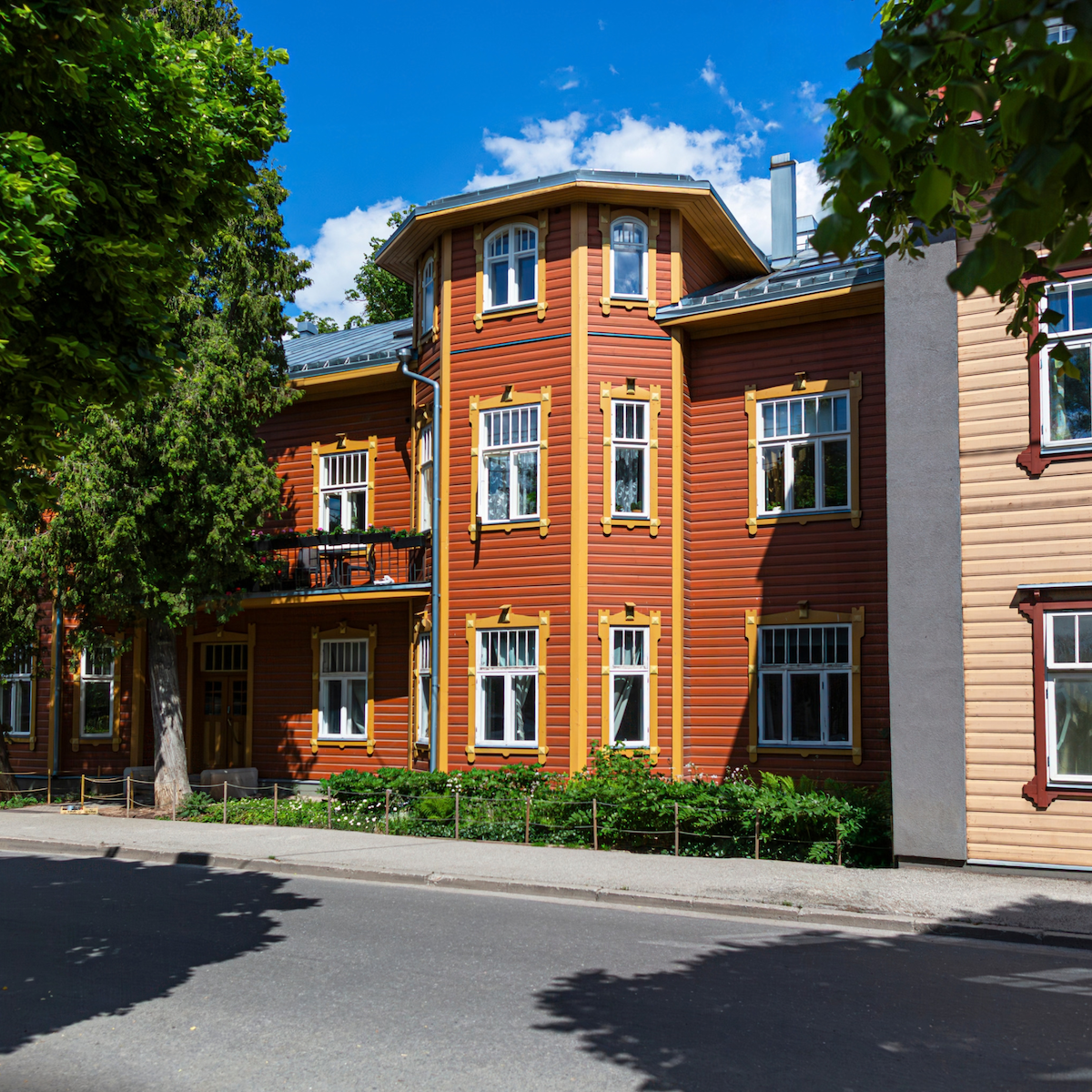
Alver Kivirüüt, Head of Insurance Product at LHV Kindlustus, explains why leaving an apartment association uninsured is a risk, the consequences of which are ultimately felt by all apartment owners.
For apartment associations that have taken out loans, signing an insurance contract is a matter of course, but thousands of other apartment buildings across Estonia have left themselves at the mercy of large and costly risks. When you look at two facts together – most apartment buildings have not taken out loans, and a large portion of them are also uninsured – a rather worrying picture emerges.
Many buildings go without loans and small maintenance issues, like rusting roof nails, are often overlooked. At the same time, these buildings are frequently uninsured against storms, fires or plumbing damage. Unfortunately, this common situation can put the homes of hundreds of thousands of residents at risk. I will explain in more detail why apartment association insurance is an essential investment, not an expense.
1. Home insurance for apartments does not cover the association’s common areas.
Even if many apartment owners have a home insurance policy, it does not cover all the damage that may occur in the apartment building. Parts of the building in co-ownership include the roof, stairwell, windows, balconies, and heating system: the association is responsible for all of these, and they require separate insurance coverage. This is why apartment association insurance exists.
2. Damage to the building’s common areas can be extensive and affect many people at once.
A fire, storm or pipe leakage can cause serious damage, specifically to the structures and systems used jointly in an apartment building. Apartment association insurance helps the association cope with such unexpected costs.
For example, the December 2025 storm caused extensive damage to building roofs, including registered damage to solar panels installed on an apartment association’s roof in Hiiumaa, insured with LHV Kindlustus.
3. It makes sense to insure not only the building but also the utility systems that keep it running.
LHV recommends ensuring that insurance covers not only the building structures but also the utility systems. These include, for example, electricity, water, heating, sewerage, and ventilation systems, as well as lifts and solar panels. Insurance can also protect advertising boards and signs installed on the building’s exterior wall and roof.
For example, LHV discovered that in an insured apartment association in Harju County, overall electricity consumption had increased significantly. An investigation revealed that the air-to-water heat pump compressor installed in 2020 was broken, meaning electricity had to be used directly for heating. The compressor could not be repaired. The air-to-water heat pump had to be replaced, which would have cost the association over 10,000 euros. Thanks to the insurance policy, the association only had to pay 300 euros.
4. Choose insurance cover based on content, not just price.
An apartment association should consider whether to prefer insurance that covers individually listed risks or to select broader all-risk cover. It is also important to assess which additional covers make sense for one’s apartment building and its location.
5. The sum insured must correspond to the building’s replacement value, especially after renovations.
LHV recommends regularly evaluating how much it would cost to restore the apartment building at current construction prices. Based on this, the insurance policy should always be updated after the association has carried out major renovation or reconstruction work, such as upgrading utility systems or installing solar panels.
6. It is also worth insuring outdoor facilities and small structures.
An apartment association’s risks do not end at the front door. The property may include rubbish bin storage areas and containers, shelters, playgrounds, fences, gates, barriers, lighting, and other facilities, the damage or destruction of which would also be a cost for the association. LHV recommends always taking these objects into account when insuring the association’s property.
7. Liability insurance is an important part of apartment association insurance.
The association is responsible for any damage related to the management of common areas or the property. A claim for damages can come from a third party or from a member of the association. For example, if a pipe leak or rainwater penetration originates from a co-owned part and damages an apartment’s interior or belongings, the apartment association’s liability insurance helps cover the loss.
According to the experience of LHV Kindlustus, liability insurance is a very necessary part of apartment association insurance. Based on LHV statistics, 40% of apartment association claims are related to liability insurance. In most cases, the damage was caused by a pipe leak under the association’s responsibility, which resulted in damage to a member’s apartment.
Apartment association insurance is not only intended for associations that have a loan or have recently undergone renovations. It is meant for all associations that want an unexpected accident to not result in extraordinary payments or tension between neighbours.
Ultimately, it all comes down to responsible management and conscious risk mitigation. Apartment association insurance is not merely an expense item in the budget, but a shared safety net that protects the building and the property of those living in it, ensuring peace of mind.
Without insurance, covering the consequences of an unexpected accident could mean expenses reaching tens or even hundreds of thousands of euros, which would be divided among all the apartment owners. This is a blow that can be prevented.
Do not wait until an accident happens. Assess your apartment association’s risks and request an insurance quote today – it is one of the most important steps you can take to protect your home and community.

 A little-known option: a young person can take out their first home loan with the help of their parents10. october 2026Financial wisdom/Banking/Youth Bank
 Before taking out a home loan, give it a trial run for a couple of months01. october 2026Youth Bank/Banking/Financial wisdom/Economy