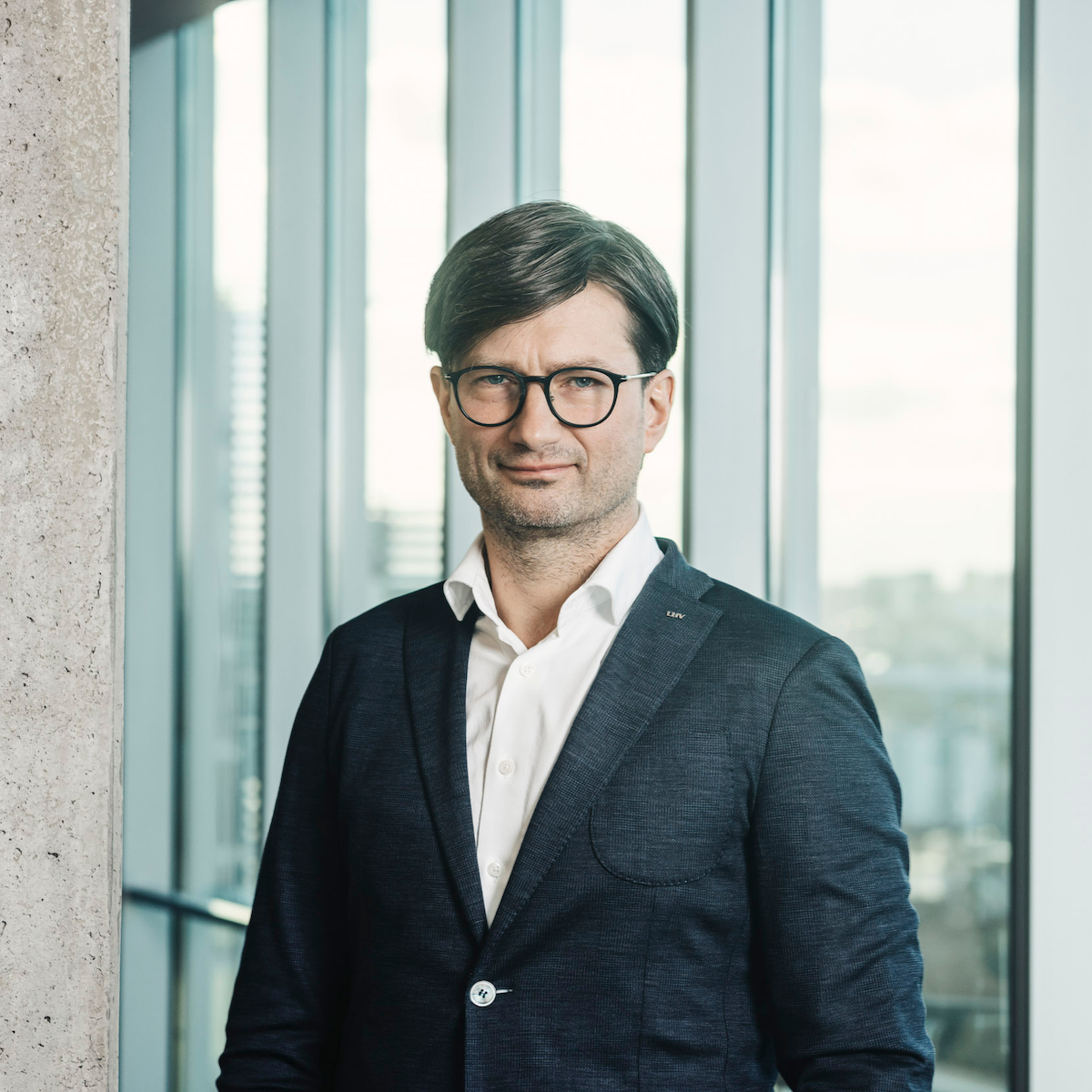
Martin Villig: Contributing to society doesn’t have to start when you’re rich
30. september 2026When Bolt’s co-founder and one of Estonia’s wealthiest people, Martin Villig, talks about charity, it’s quite easy to prematurely catch yourself thinking: What’s the harm in him donating? After all, he’s got plenty of money.
In fact, his contribution to society began much earlier. At a time when he was an ordinary wage earner, and his family’s financial circumstances were quite different from what they are today.
Early in his career, Villig joined the youth organisation JCI Estonia, where he volunteered to organise charity events and raise money to support various initiatives. He didn’t have large sums to donate at the time, but he was able to contribute his time.
In 2009, he and other like-minded individuals set out to develop the Estonian start-up community; the Estonian Founders Society was established, followed shortly afterwards by the Garage48 series of hackathons. These organisations, too, were largely established through voluntary work and enthusiasm, with the aim of jointly promoting the technology sector.
When he launched Bolt in 2013, he spent almost all his energy over the next few years building up the business. It was only once Bolt had grown bigger that there was once again more time and the financial means to address social issues.
The Heateo Education Fund was established in 2018, followed by the launch of the kood/Jõhvi programming school; in recent years, Villig has contributed to various educational initiatives by offering his time, experience, network, and financial support. ‘For me, there wasn’t one single defining moment when I decided to become a philanthropist. It has been a long-term process, during which my contribution has grown as the opportunities have increased,’ he says.
When is enough enough?
Villig’s own experience shows that needs vary at different stages of life. When his children were small, and the family lived on the outskirts of town, they needed a car. Their lifestyle changed when they moved to the city centre. At the moment, the family doesn’t have a car, and most of their daily life is organised on foot or by bike.
According to the entrepreneur, he has also made purchases that seemed like a good idea at first. During the pandemic, Villig bought a larger country house, but soon realised that owning and maintaining it didn’t bring the joy he’d expected, so he decided to sell it.
Experiences like these have led him to ask himself more and more: When is enough enough?
There is no single correct answer to this question. A young family may have very different needs from someone whose children are already grown up and who has achieved financial security.
'Over time, it has become increasingly clear to me that the value of our stake in Bolt is far greater than our family could reasonably make use of in a lifetime. ‘At the moment, I’m trying to donate around half of my annual income, and in the long term, I’d like to allocate over 90 per cent of my assets to charity,’ Villig points out. ‘That’s my personal choice; it’s not that I think others should do the same.’
According to him, a far more interesting question is: What is the right way for each individual to contribute?
As prosperity grows, so does the opportunity to make a difference
A few years ago, whilst reading Andrew Carnegie’s 1889 essay ‘The Gospel of Wealth’, Villig was struck by the author’s central idea that wealth brings with it a greater responsibility towards society.
Nowadays, he would put it slightly differently: prosperity brings with it, above all, a greater opportunity to make a difference.
No one is obliged to make a donation, as everyone has earned their own money and decides for themselves how to spend it. However, the more time, knowledge, contacts, or money we have, the more opportunities there are to have a say in the sort of society we want to live in.
‘Whilst travelling, I have seen countries where the wealthier members of society live in residential areas surrounded by high walls and guarded by security personnel, because social inequality is too great. I wouldn’t want to live in a society like that,’ says Villig.
His wish is for all children in Estonia to be able to get to school safely on their own and receive a good education, regardless of the family they were born into. Similarly, Villig believes it is important that, in the event of mental health concerns, help is available before a crisis arises and that older people are not left on their own.
‘People need to feel that they are noticed and valued. A society like that is better for all of us,’ he adds.
Estonia is doing well, but we also have some unresolved issues
Although, in Villig’s view, we have every reason to be proud of our strong digital state, our excellent education system, and our successful businesses, there are also areas of concern in Estonia that should not simply be dismissed as someone else’s problem.
Some examples:
- the number of suicides among young people and mental health problems have risen rapidly;
- only 10 per cent of people in Estonia get enough exercise on a daily basis;
- domestic violence affects 41 per cent of women and families;
- thousands of young people reach adulthood without a secondary education or vocational qualifications.
For him, it is not the grim statistics that matter most, but the question: What can we do to solve these problems?
Often, getting involved starts very close to home: by noticing your child, a colleague, a neighbour, a teacher, or an elderly relative, and asking how they’re really getting on. However, some problems require professional organisations that are capable of developing solutions in a systematic manner.
Charity isn’t just about money
Villig considers one of the most important lessons he has learnt on his journey to be that charity is by no means limited to financial support alone. ‘There are at least four ways to contribute to charity: time, knowledge, networks, and money,’ he says.
The Heateo Foundation’s community comprises over 300 professional volunteers, including lawyers, HR specialists, marketing professionals, finance experts, entrepreneurs, and professionals from many other fields. They help civic initiatives tackle the same challenges that businesses face: strategy, management, recruitment, communication, technology, and finance.
Since 2003, the Heateo Foundation has helped to launch and develop more than a hundred initiatives with a social impact (such as Noored Kooli, Uuskasutuskeskus, the Bullying-Free School Foundation, the SPIN programme, Asendusõpetajad, and the Child Wellbeing Development Centre). Its role is to provide a boost to promising initiatives, helping them refine their business model, build a strong team, measure their impact, and grow from a small idea into a working solution.
Impact portfolio
As an investor, one is accustomed to monitoring the return on capital. According to Villig, when it comes to charity, it is worth looking beyond the euros donated and asking what actually changes as a result.
He likes to think that, as well as an investment portfolio, a person could also have an ‘impact portfolio’. ‘Whilst an investment portfolio grows our wealth, an impact portfolio helps to build the society in which we, our children, and future generations live,’ says Villig.
You don’t need to start your impact portfolio with large sums of money. For some, this means a couple of hours of their time; for others, 1 per cent or 10 per cent of their income; and for others still, an opportunity to help by contributing their professional expertise and network. ‘Ultimately, the most important thing is to find a cause and a way of getting involved that really matters to you,’ he emphasises.
A question worth asking yourself from time to time
As well as focusing on your career, your business, and building your wealth, it’s worth taking a look at the bigger picture from time to time. Perhaps what matters most is not how much we accumulate in the course of our lives, but what sort of Estonia we wish to leave to the next generation. If things are going well for us, what can we do to ensure that things go a little better for the society around us as well?
This doesn’t necessarily mean large sums of money. You could start by taking notice, doing voluntary work, sharing your knowledge, or advising on an initiative.
However, you can also donate money. For example, by donating EUR 2,400 a year, a person ranks among the top 1 per cent of donors in Estonia. A donation of EUR 8,900 a year puts you amongst the top 0.1 per cent of donors.
Villig believes that Estonia has considerable potential to increase these figures. ‘In my own experience, contributing to society doesn’t detract from a good life. If anything, it adds another dimension to it,’ he says.
If you’d like to get involved, there are several ways to contribute via the Heateo Foundation:
- join a community of professional volunteers and contribute your expertise to various initiatives;
- support the Heateo Foundation (LHV account EE457700771003416179);
- keep track, via the newsletter, of which social issues and solutions in Estonia currently require the most attention.
Find out more: heategu.ee
 The head of the housing association whose building was voted the best in Tartu: “If someone is willing to take the lead in renovating the house, appreciate them”28. september 2026Business/Economy/Banking
 Sander Mölder x Premium: curiosity takes you further than a fixed plan24. september 2026Business/Economy/Banking/Financial wisdom/Insurance
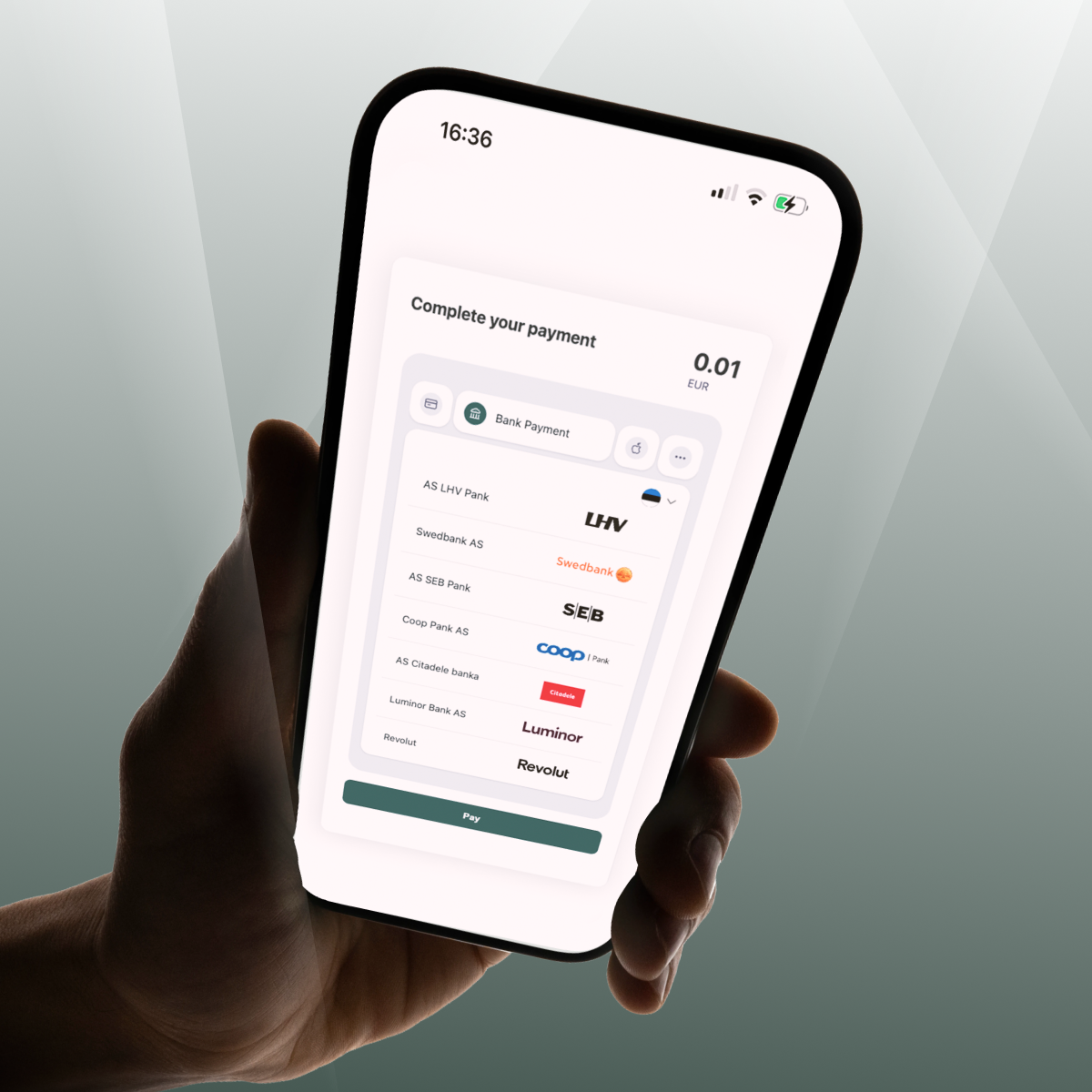 NEW! With Payment Elements SDK, you can manage all payment methods via a single integration21. september 2026Banking/Business