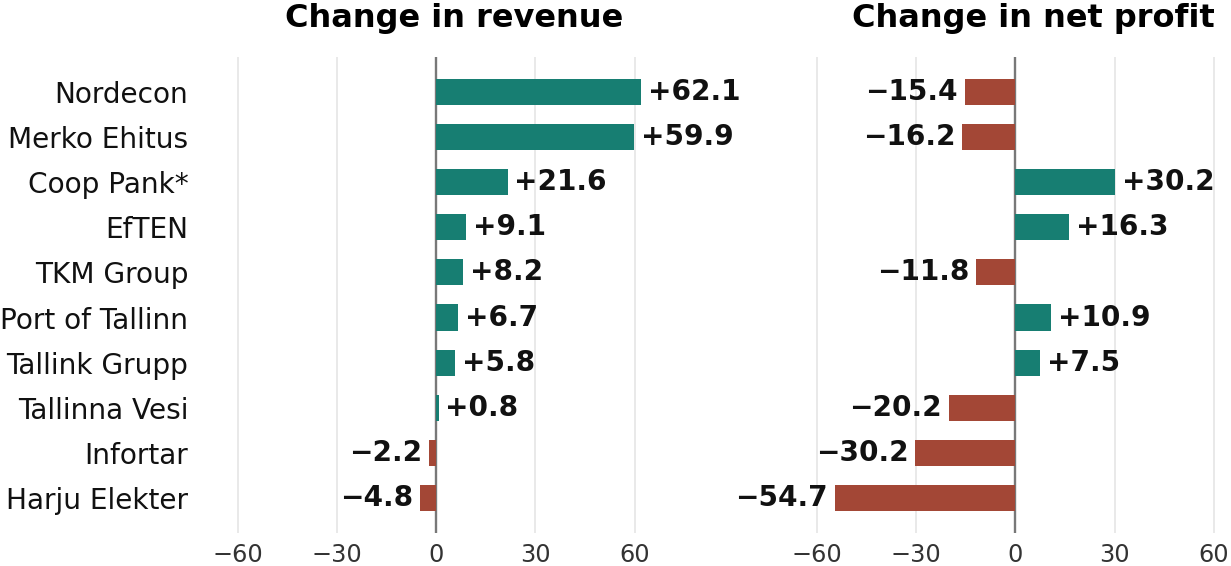
The Q3 results of companies listed on the Tallinn Stock Exchange showed that business volumes and revenue were growing faster than profits. Of the ten companies reviewed, eight increased their revenue year on year, while only four reported higher net profit. All ten nevertheless ended the quarter in profit, but rapid growth in construction, strong car sales and increased passenger traffic masked a more complex picture of profitability.
Revenue grew fastest at construction companies Nordecon and Merko. Coop Pank, EfTEN, the Port of Tallinn and Tallink increased their profits, although their headline results also warrant a closer look. Tallink’s profit benefited from lower depreciation expense, while rising Euribor rates had different effects on the bank and the property fund.
Revenue rose at eight companies and net profit at four
Source: company reports and stock exchange announcements
Higher construction volumes did not translate into higher net profit
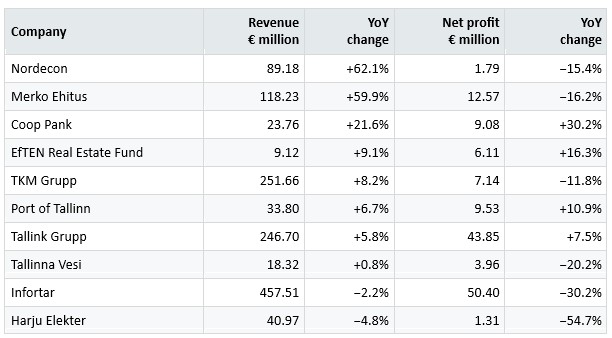
A simple comparison helps explain Nordecon’s quarter: for every EUR 100 of revenue, the company earned EUR 4.70 in gross profit, compared with EUR 8.10 a year earlier. That still has to cover administrative expenses and borrowing costs, among other things. Revenue could therefore grow by more than 60% while net profit declined. Nordecon was left with EUR 1.79 million in net profit, down 15% from a year earlier. According to the company, higher input costs and projects with lower margins weighed on the result.
Merko also had considerably more work as several major projects entered the active construction phase, while 118 apartments and 18 commercial units were handed over to buyers. Even so, net profit fell by 16% to EUR 12.6 million. An order book of almost EUR 770 million provides reassurance about future workloads, but delivering those contracts profitably is a separate challenge. Rising fuel and energy prices, together with intense competition among residential developers, leave little room for error. In builders’ next reports, large contracts will therefore deserve attention alongside the amount they ultimately contribute to the bottom line.
Coop Pank grew its profit alongside its loan portfolio
Several factors worked in Coop Pank’s favour at once. Its loan portfolio grew by 14% year on year, impairment charges on financial assets declined and, according to management, rising Euribor rates also supported earnings. Net profit increased by 30% to EUR 9.1 million. Here, business growth clearly translated into higher profit. However, the bank’s own operating expenses rose by 19%, making both loan quality and the ability to contain cost growth important going forward.
EfTEN continued to grow despite rising financing costs
EfTEN Real Estate Fund experienced the same interest rate environment from a borrower’s perspective. The fund’s third-quarter interest expense increased by 14% year on year; in addition to rising Euribor rates, new loans and refinancing affected its financing costs. Nevertheless, net profit grew by 16% to EUR 6.1 million. Support came from the properties themselves: new investments generated additional income, while the vacancy rate fell to 2.2% by the end of September. The Magistrali shopping centre, acquired in June, accounted for more than half of the fund’s growth in earnings before interest, tax, depreciation and amortisation (EBITDA) over the first nine months. High occupancy helped offset more expensive financing.
Car sales continued to drive TKM Group’s growth
Reading TKM Group’s report could leave investors with two quite different impressions of the recovery in consumer spending. The picture was brighter in car showrooms, where segment revenue grew by 39%. Supermarket sales, however, were 1.7% below the previous year’s level. It would therefore be premature to conclude from the group’s overall revenue growth that consumers were generally loosening their purse strings.
Car sales benefited from the recovery in the Baltic automotive market, servicing operations and the acquisition of Škoda dealerships. Supermarkets, meanwhile, had to contend with weak consumer spending, competition and disruptions related to store renovations. Selling cars also required concessions in response to pricing pressure. Add rising staff and financing costs, and it becomes clear why the group’s 8% revenue growth was accompanied by an almost 12% decline in net profit. More sales did not yet make earning a profit any easier.
Profit growth in the maritime sector had different drivers
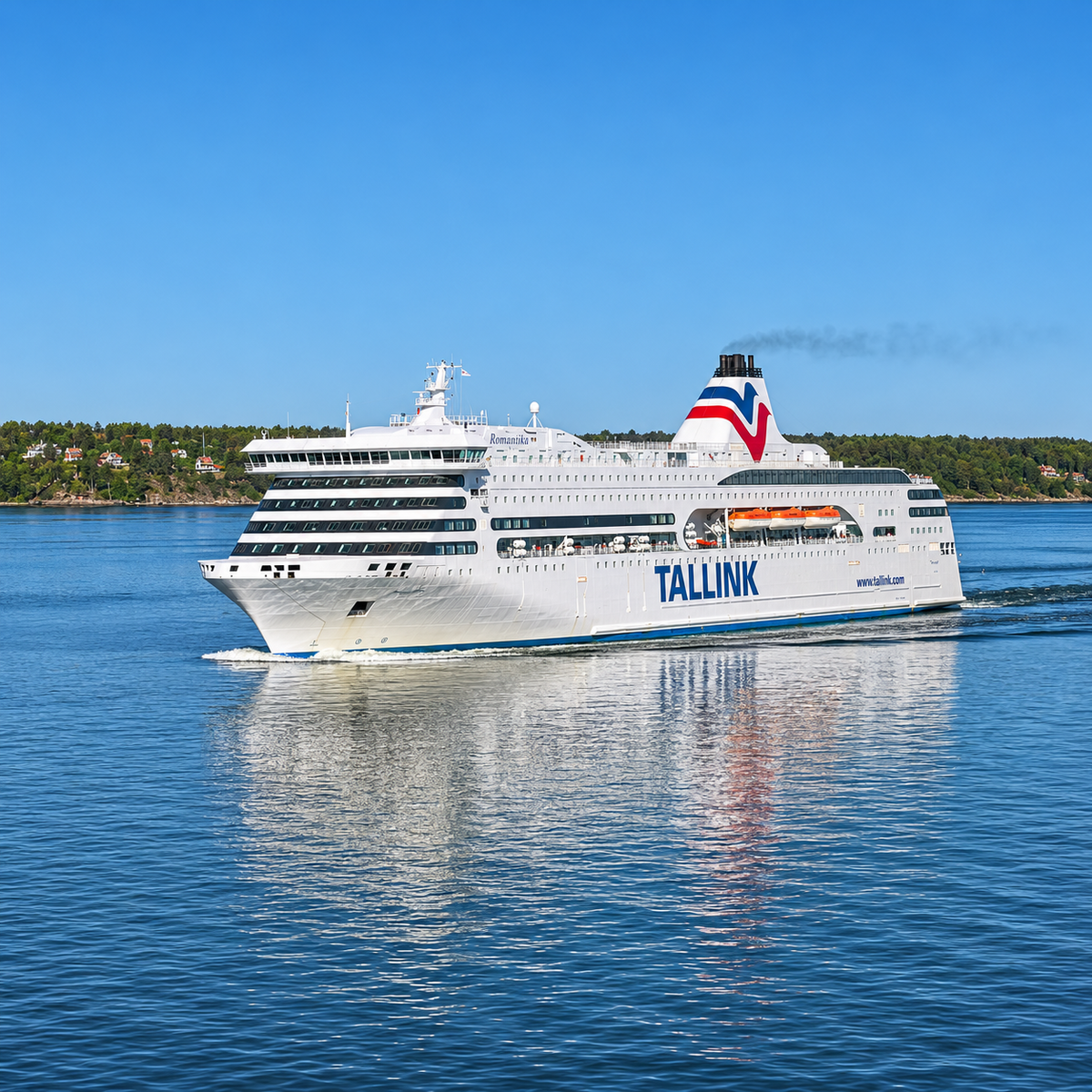
Tallink’s summer quarter brought more passengers and cargo aboard its ships. Revenue also increased, while net profit of EUR 43.8 million exceeded the previous year’s figure by 7.5%. At first glance, a fairly good result. Yet EBITDA declined slightly, partly because fuel costs were EUR 9.2 million higher than a year earlier. Net profit and the cost pressures on the underlying business were therefore telling somewhat different stories.
A EUR 4.2 million reduction in depreciation expense helps explain the difference. Tallink standardised the estimated useful lives of its cruise and passenger vessels, excluding shuttle vessels, at 45 years. Spreading a vessel’s cost over a longer period reduces the expense recognised in each quarter. The sale of Regal Star last year also had an effect. This helped lift profit even as fuel and emissions costs weighed on day-to-day operations.
The Port of Tallinn’s quarter was more straightforward in this respect, as revenue, adjusted EBITDA and net profit all increased. Net profit rose by almost 11% to EUR 9.5 million. Cruise operations and ferry services provided support, with higher fuel costs also feeding through into revenue via indexation. Cargo volumes passing through the ports nevertheless remained below the previous year’s level, while profit for the first nine months was still almost 18% lower year on year. One strong summer did not make up for the shortfall accumulated over the year.
Last year’s investment income magnified Infortar’s profit decline
Infortar’s 30% decline in net profit might initially suggest a sharp setback. Yet the group still earned EUR 50.4 million, and operating profit actually increased slightly. The major difference lay in financial investments: these generated EUR 17.6 million in income in the third quarter of last year, whereas this year the group recognised an expense of EUR 2.4 million. That swing has a much greater impact on the comparison than the group’s 2% decline in revenue. The picture was also mixed across its core operations. Elenger’s gas and electricity sales volumes fell mainly because of lower wholesale volumes, while Tallink’s profitable summer quarter contributed to the group’s earnings.
Manufacturing and water utilities revealed pressures on profitability
Harju Elekter’s report contained both improvement and disappointment. In terms of profitability, the third quarter was the company’s best so far this year, but net profit stood at EUR 1.3 million, less than half the figure recorded a year earlier. Lower production volumes mean that a factory’s fixed costs must be covered by fewer sales. Some projects were delayed, and workloads remained uneven across its operations.
Orders from the data centre sector provide grounds for a more optimistic outlook. The next step, however, is to turn those orders into finished products and revenue. The quarter’s operating margin of 5.7% represented an improvement on the first half of this year, but there is still some way to go before reaching last year’s 8.7%. The strength of Harju Elekter’s recovery can be assessed by whether its factories secure more work and translate higher utilisation into profit.
At Tallinna Vesi, everyday service delivery went hand in hand with substantial construction work for the future. The company invested EUR 16.4 million, more than a year earlier. Revenue, by contrast, remained broadly unchanged: water service tariffs introduced in July supported revenue, but sales of construction services declined.
Higher operating and financing costs pushed net profit down by a fifth to EUR 4 million. Even a relatively stable water utility therefore serves as a reminder that providing an essential service does not shield a company from cost pressures. Upgrading pipelines and treatment plants helps keep services running, but also requires capital and financing.
Higher revenue still has to prove its worth
The Tallinn Stock Exchange’s third quarter offered more reason to celebrate growing business volumes than improving profit margins. Coop Pank showed that volumes and profit can grow together, but that relationship was weaker for builders and retailers. In the next round of reports, a broader recovery would be supported by Merko and Nordecon improving their margins while handling more work, and by TKM’s growth extending more firmly into supermarkets. Growth would then be more clearly visible on companies’ bottom lines.
Revenue refers to net operating income for Coop Pank and sales revenue for the other companies
This article is for informational purposes only and should not be construed as investment analysis or a recommendation to buy or sell the securities mentioned. LHV is not liable for any decisions made based on this information.
Investing involves both opportunities and risks; the market value of securities may rise or fall. In foreign markets, returns may be affected by fluctuations in exchange rates.
The past or future performance of the securities and financial indices discussed above does not constitute a promise or indication of future performance.