From eight shops to 100+ shops: Merit Miller, co-founder of the cheese shop Juustukuningad, explains how to grow a business without losing soul and quality
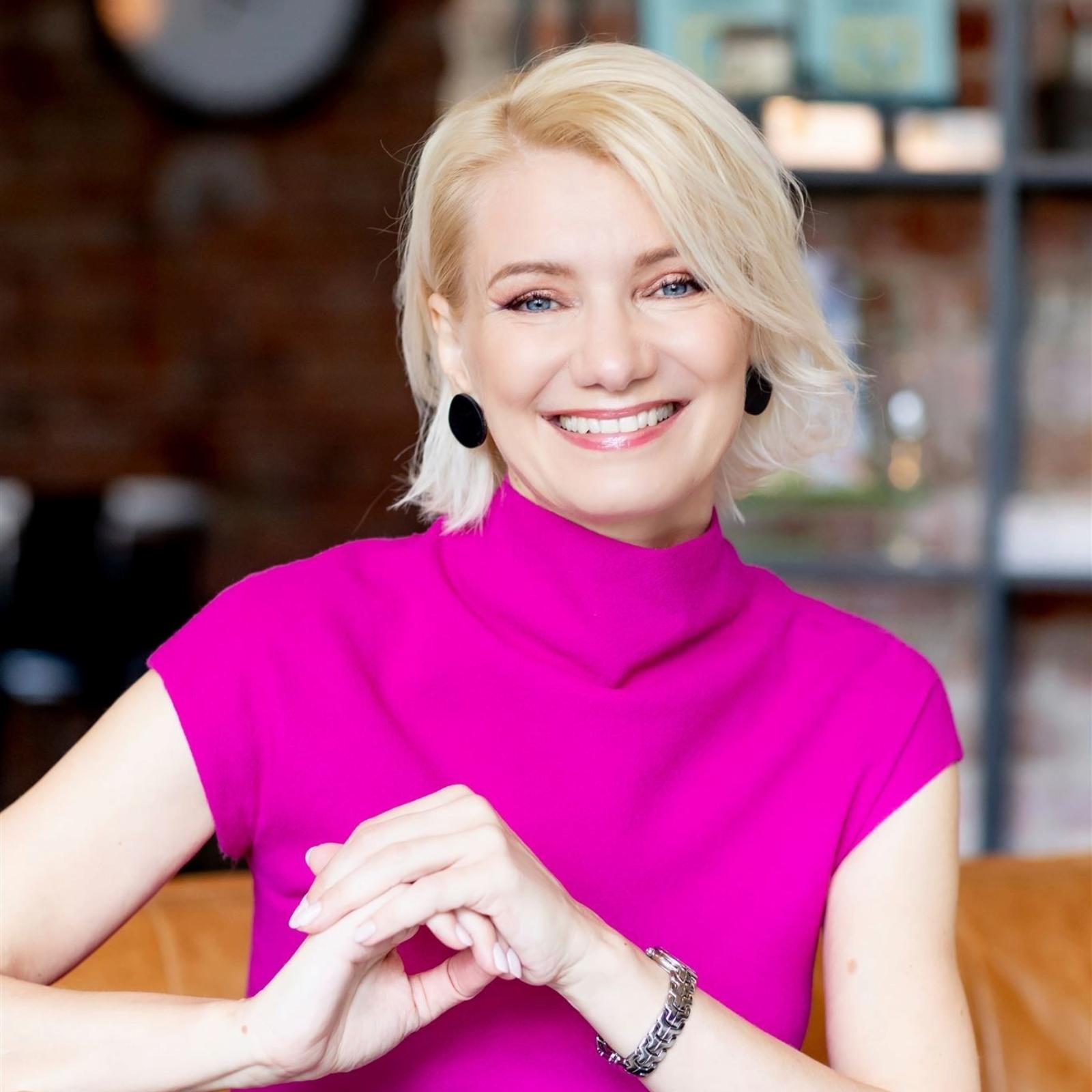
26. november 2026How to expand in retail in the domestic market and abroad so that a high level of service and direct customer experience is preserved in every shop? The LHV podcast welcomed Merit Miller, co-founder of Juustukuningad and a long-standing family business owner, who spoke openly about her journey, the joys and challenges of the franchise model, and why excessive perfectionism can become the biggest obstacle in business.
When Merit Miller and her partner Erwin Wassenaar began importing their first cheeses from the Netherlands to Estonia 14 and a half years ago, they had no plans whatsoever to set up a franchise. The goal was to open six shops in three years. Reality, however, outperformed expectations, as after three years there were already eight shops.
At that exact point, the moment of truth arrived for the entrepreneurs. ‘We couldn’t be in Tallinn, Tartu and Viljandi at once ourselves. We realised that, in order to provide excellent service and a genuinely positive emotion – which had been our main business goal from the very start – something had to change. Managing eight shops from a single location was the limit of our concept,’ recalls Miller.
The franchise model was seen as the solution. Miller explains that franchising is not merely a way to grow quickly, but that it resolves one of the most critical bottlenecks in retail and the service sector: how to ensure that the person standing behind the counter really does have a sparkle in their eyes.
Nothing can replace a sense of ownership
Juustukuningad has never defined itself as a regular grocery shop. According to Miller, their core is to provide the visitor with an experience, new knowledge and positive emotions based on the principle of ‘try before you buy’.
‘In ordinary retail trade, it is customary to rent premises and hire employees who come and go. We, however, realised that in order to maintain a high level, we need the person in the shop to have a real sense of ownership. They must feel the rewards of add-on sales in their pocket and in their heart, and talk about the products with passion and enthusiasm. This creates a memorable experience for the customer and makes them want to come back time and time again,’ says Miller.
A franchise offers a start-up entrepreneur the opportunity to join an established system: a recognised brand, ready-made logistics, checkout and warehouse management solutions, and a proven product range. At the same time, the franchisee assumes responsibility for the performance of a particular shop.
Safe growth starts within the organisation
As the first and most logical step, Juustukuningad began offering franchises to its own smart and dedicated staff. Miller considers this model to be one of the most successful steps in retrospect, because people were already enthusiastic about it and the business model was clear.
One notable example is Taavi, who started out at the company as a warehouse worker, carrying heavy wheels of cheese (which, according to Miller, was a great way to get a workout). Seeing the young man’s initiative and dedication, the founders offered him the opportunity to buy the shop in Viimsi. Today, Taavi has grown into an experienced entrepreneur who runs three successful shops in Viimsi, Peetri and Järve.
Age is just a number – becoming an entrepreneur at 67
The second, and perhaps one of the most inspiring stories, takes us to Pärnu. About six years ago, the founders were approached by Sirje, aged 67, who had no previous business experience whatsoever and no start-up capital either. She did, however, have tremendous determination and a clear vision to buy the shop in Pärnu.
‘She told us straight out: I’ve got no money and no experience, but I want to do this. Her eyes sparkled and her plans had been thought through down to the last detail. She saw it as her new purpose in life,’ recalls Miller. ‘If you have to choose between two candidates, one of whom is simply very good and the other whose eyes sparkle like crazy, I’ll always go for the one with the sparkling eyes.’
Juustukuningad accommodated Sirje and gave her a five-year loan to buy the shop. Immediately afterwards, the world was hit by the coronavirus crisis, but Sirje did not lose heart. She set daily sales targets for the shop, hired a coach, worked early in the morning and paid off her loan ahead of schedule. Today, the Pärnu branch is one of the best in the chain, and they are even developing a cheese ice cream on site with collaboration partners. Furthermore, at the age of 73, Sirje enrolled at university to study product design.
This proves that it’s never too late to start a business, and the franchise provides a safety net to help avoid the pitfalls of starting from scratch.
A franchise manual must not kill local initiative
Although global giants such as McDonald’s demand painstaking standardisation in every corner of the world, the team of Juustukuningad believes in controlled freedom.
Core products – around 30 to 40 core cheeses, which customers expect to find in every branch – are universal, and logistics are centrally managed from the Netherlands, where French Brie, Norwegian brown cheeses and Dutch Gouda are all sourced. At the same time, each franchisee is permitted 15–20% flexibility to sell local extras, jams and snacks, or to stock the speciality cheeses their local customers prefer most.
‘It is this freedom that makes you feel good. If a franchisee or shop assistant comes up with a good idea on the spot, or if a situation requires an immediate solution, they must have the authority to make decisions,’ explains Miller.
Global lessons
Juustukuningad has also expanded beyond Estonia. Today, the trade mark is protected in Europe under the name Cheese Kings, but the local language and cultural space must always be taken into account when entering different countries.
A striking example was the Ukrainian market. Local partners and linguists flatly advised against directly translating the name as Cheese Kings, since the word ‘king’ in that context often refers to a mafia boss or the underworld. And so the name Cheese Kingdom (Сирне Королівство) came into being. Before the war broke out, there were as many as 83 shops in Ukraine, and despite the extremely difficult circumstances, around 50 of them are still in business there today.
Three important lessons for a start-up or expanding entrepreneur
Drawing on more than a decade of experience, Merit Miller highlights three principles that every entrepreneur should bear in mind:
-
As a franchisee, you’ll have to be behind the counter at first. According to Miller, a franchise shop does not function as a passive financial investment. ‘The owner must be willing to create a job for themselves and initially work in that position on at least a half-time basis. That is how they get a feel for the product, the customer and the team.’
-
Closing down a site is not a failure. How shopping centres and locations perform changes over time. If the shop does not start generating the expected profit in its second year, you must have the courage to close it and move on to the next location. In the retail sector, this often simply means moving the shelves and staff to a new, more promising location.
-
Forget about excessive perfectionism. The journey of an entrepreneur takes shape along the way. ‘Perfectionists have the hardest time in business. Business plans are necessary, but you have to leave some room to manoeuvre and just start going. Make that first call, explore your options and get started. The willingness to take action doesn’t just happen by itself – it’s a conscious decision, and you have to stick to that decision,’ says Miller.