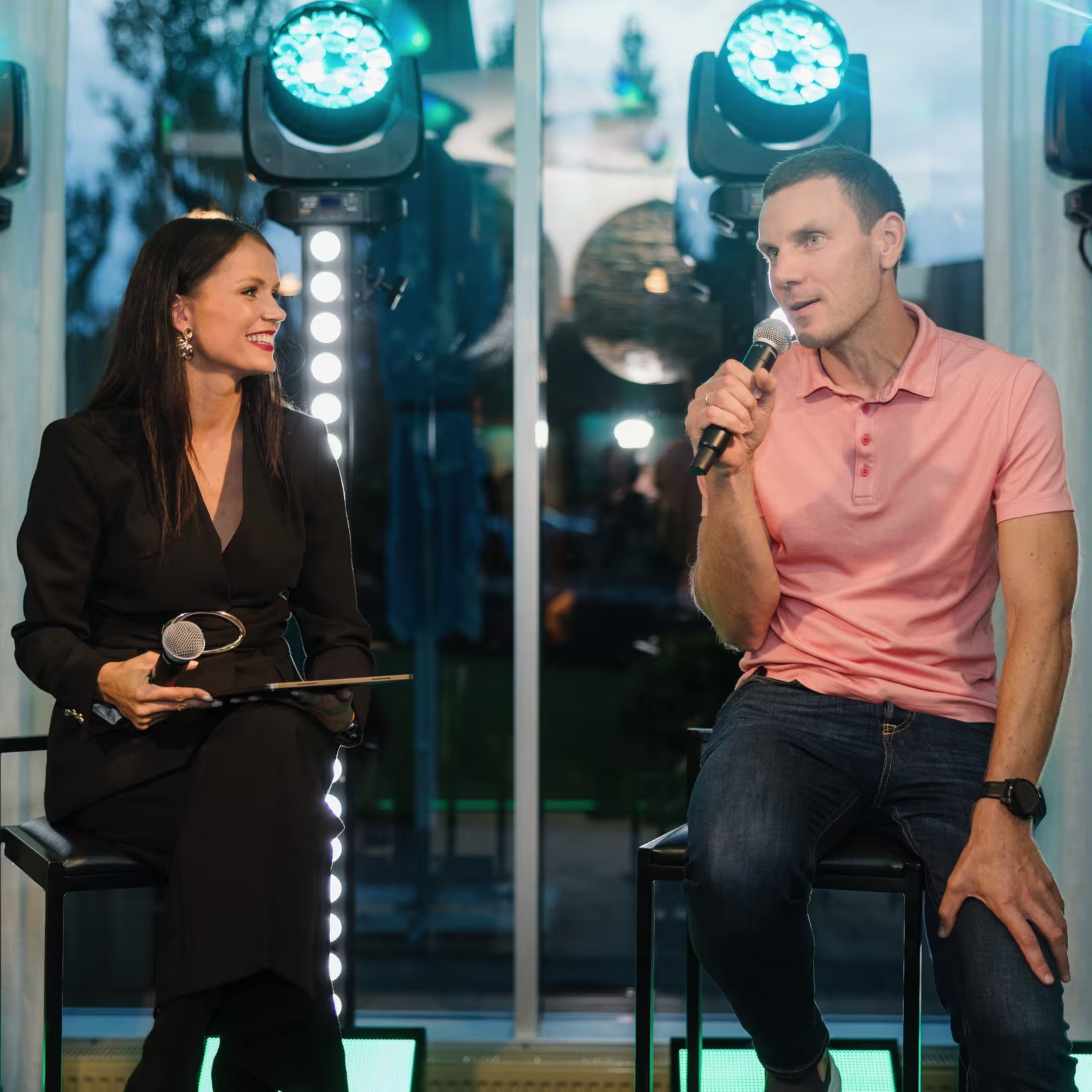
Marge Kari, CEO of the Tank Creative Agency, draws on her son’s experience to explain how the Optimist dinghy class can become the best test of independence and courage in decision-making for a young person, on the strength of which they can sail far in life.
How did your family find its way into sailing?
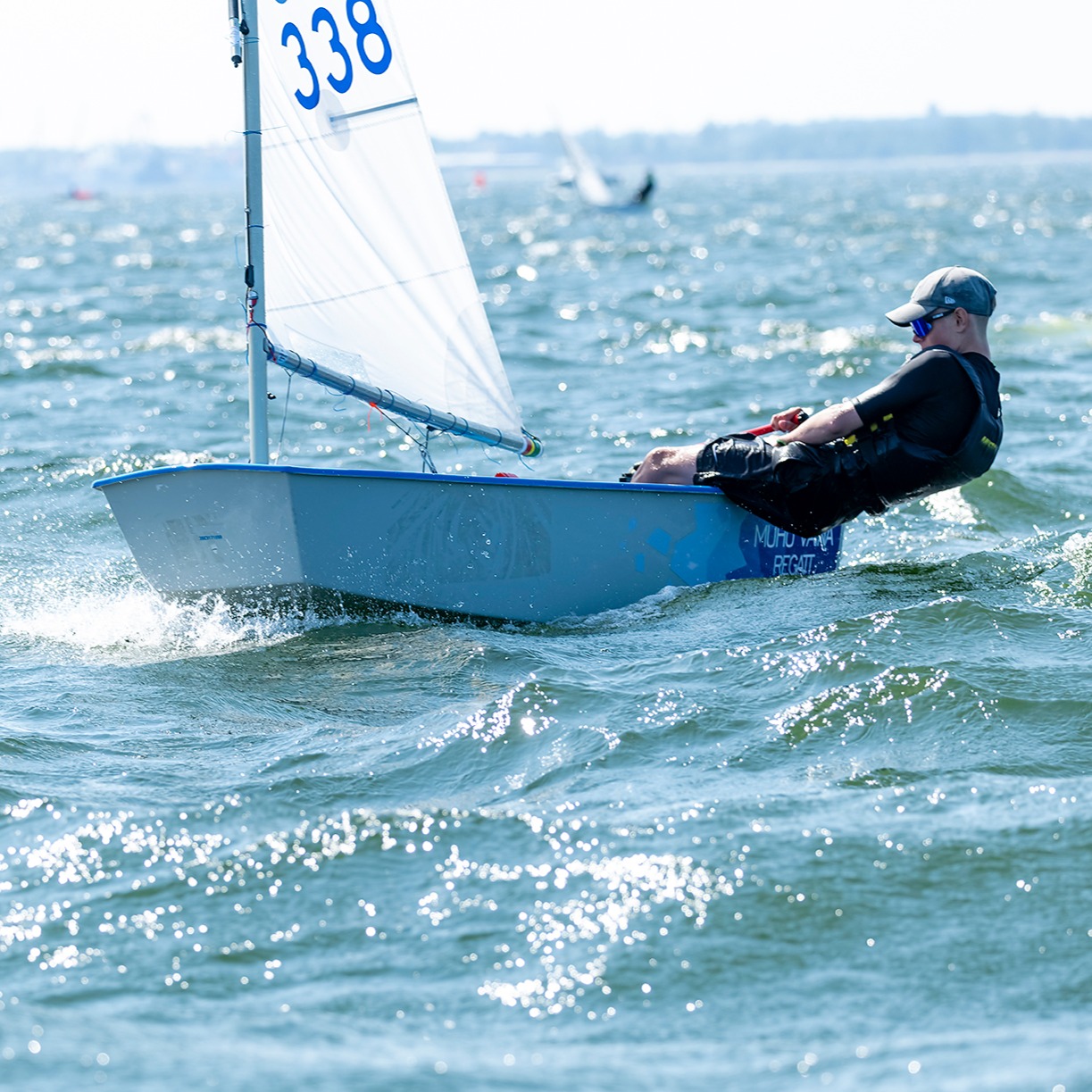
Our son, Iko, had tried both football and cycling, but he wasn’t quite sure whether those sports were really for him. In summer 2022, representatives of the Kalev Yacht Club sports school visited the Pirita Gymnasium of Economics to introduce young people to sailing and invite them to take part in beginner courses. My child and a couple of classmates decided to go and give it a try. After just two training sessions in Pirita, he came home determined to continue in Optimist training for the summer, because the coach was apparently very nice and he found sailing the boat on the water simply brilliant. So, a boat was rented for him from the club, and an active summer lay ahead.
In an Optimist dinghy, a child can experience from a fairly young age what it means to manage themselves independently on the water. Please think back to the day when your son first went out to sea alone. What feelings did you experience?
Of course, none of them ventures out to sea all alone. They always go together with the coach, and before that, the basic instruction on using the boat and safety is done on land. Moreover, the children of Kalev Yacht Club get their first feel of being in a boat on the River Pirita, so the start of training did not seem frightening to us.
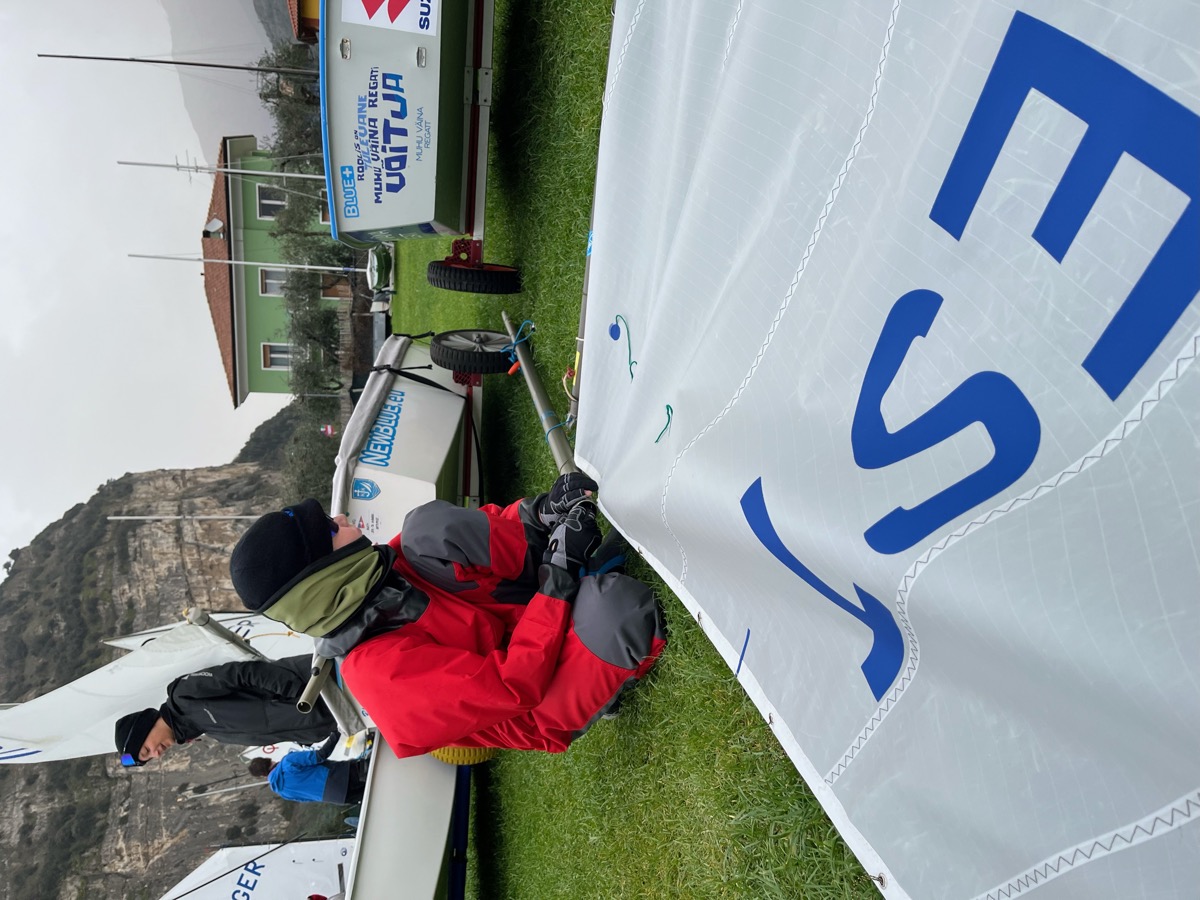
The first time I felt slightly worried – wondering how that little boat and my child would cope with the wind, in the middle of the sea, far from the shore and the coach – was when my son took part in an LHV league stage in Kärdla for the first time. The wind and rain were so strong on the first day that the children weren’t allowed out to sea in the Optimists at all. On the second day, the races did take place, and the emotions and state of mind with which my son returned to shore remain strong in my memory. He was tired, but happy. He packed up his boat efficiently, albeit a little grumpily, and at first, he didn’t want to share anything with me. Later, I realised that both going out to sea and coming back from it are part of the competition, as the sailors need to wind down from the emotions of competing and recover from the adrenaline rush. You can start talking to them again about an hour after landing.
What kinds of skills or attitudes has sailing taught your child that are also useful outside the sport?
Definitely independence, decision-making and self-confidence, and the courage to stand up for himself. It has also taught him to think quickly and tactically, assess and resolve different situations, as well as how to be composed and courageous in any situation in life.
Sailing is often considered an expensive and dangerous sport. How would you describe the everyday life of a sailor?
As long as the child is still exploring and trying to figure out whether they even like sailing, it’s no more expensive than any other sport that requires equipment. However, if their interest grows, the sailing starts to go well, and good results are achieved in competitions, then, of course, there is reason to think about better equipment and more comfortable clothing. In my view, this is a question of perspective – an investment in a child’s mental and physical development.
As the season in Estonia effectively lasts from May until the end of September, sailors keep themselves in physical shape for the rest of the year with other activities: they do track and field, go to the gym, and ski. If possible, training camps are attended in early spring in Southern Europe to maintain racing form. In summary, it’s a very versatile sport. From a parent’s perspective, it’s simply wonderful that my child has plenty of exciting activities in summer and that he spends so much time in the fresh air.
The LHV Optimist League is the first competition experience for many young people. How would you describe the atmosphere there to those who have never been to a stage?
This is a great racing series for beginner boys and girls who have completed the basic course, found their passion, and want to continue training. By competing in this series, they gain their first real racing experience and knowledge: they learn the rules and racing flags, and find out how to prepare for the start and when to head out onto the water. The LHV league is an indispensable starting point for young sailing enthusiasts, as it provides the necessary skills and experience for future cup competitions. And the most wonderful thing: children make new friends all over Estonia, because competitions are held in our various lovely small harbours.
What is your favourite memory from a summer competition or training session that best captures the essence of sailing?
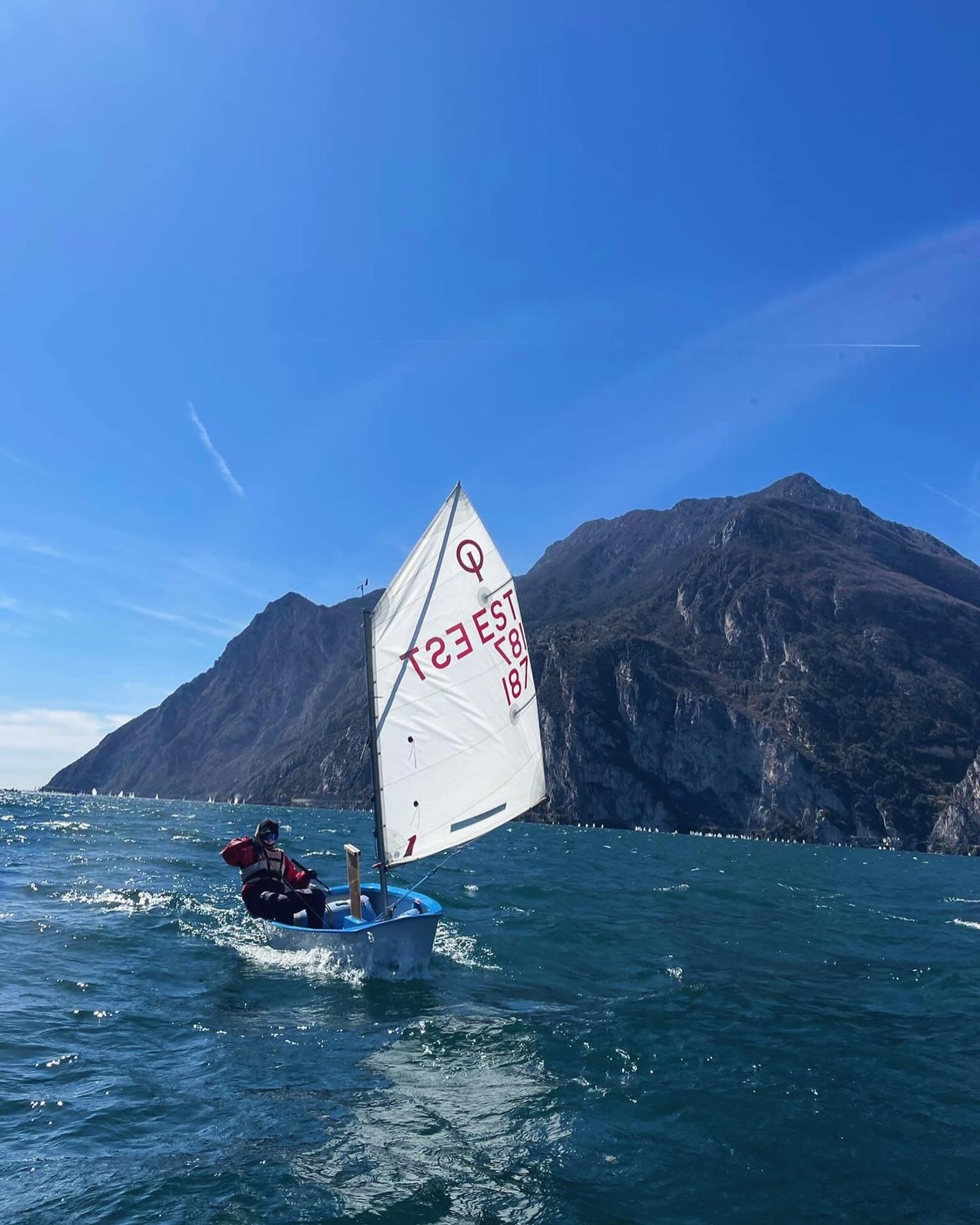
It was at a regatta held in spring 2024 on Lake Garda in Italy, where nearly a thousand Optimists from all over the world took part. I watched it from the shore and couldn’t understand how it was possible for those tiny girls and boys from different nationalities to even understand when to start and where they had to sail on that huge lake. After the first day of competition, I asked my son about it and got this reply: ‘I didn’t really understand what was happening; I just started following the others!’ In other words, in sailing, you can never plan anything; the little captain makes all the decisions on the spot, as things unfold.
What would you recommend to a parent who is still considering whether to take their child to sailing training?
Sailing is a sport that you can’t watch with your own eyes while standing beside a stadium or pitch and, on that basis, judge what your child is doing and how well they are performing at that moment. It must be purely the child’s own wish to try. The parent’s role is to have faith in their child and support their choices, because the only results that can be seen are in the competition table in the form of points and the child’s motivation to pursue the sport.
LHV supports the Estonian Optimist Class Association to bring more children and young people into sailing and help develop the next generation of Estonian sailors.

 A little-known option: a young person can take out their first home loan with the help of their parents10. october 2026Financial wisdom/Banking/Youth Bank
 Before taking out a home loan, give it a trial run for a couple of months01. october 2026Youth Bank/Banking/Financial wisdom/Economy