The automatic subscription business model, or in other words, the subscription economy has reached a mature stage. The days when customers signed up for a service and forgot about their monthly payments are over. In today’s highly competitive market, the focus has shifted from acquiring new customers to retaining existing ones, offering greater payment flexibility and making smarter use of automation. In the subscription business, the real work begins after a customer signs up, as building and maintaining long-term relationships becomes the key priority.
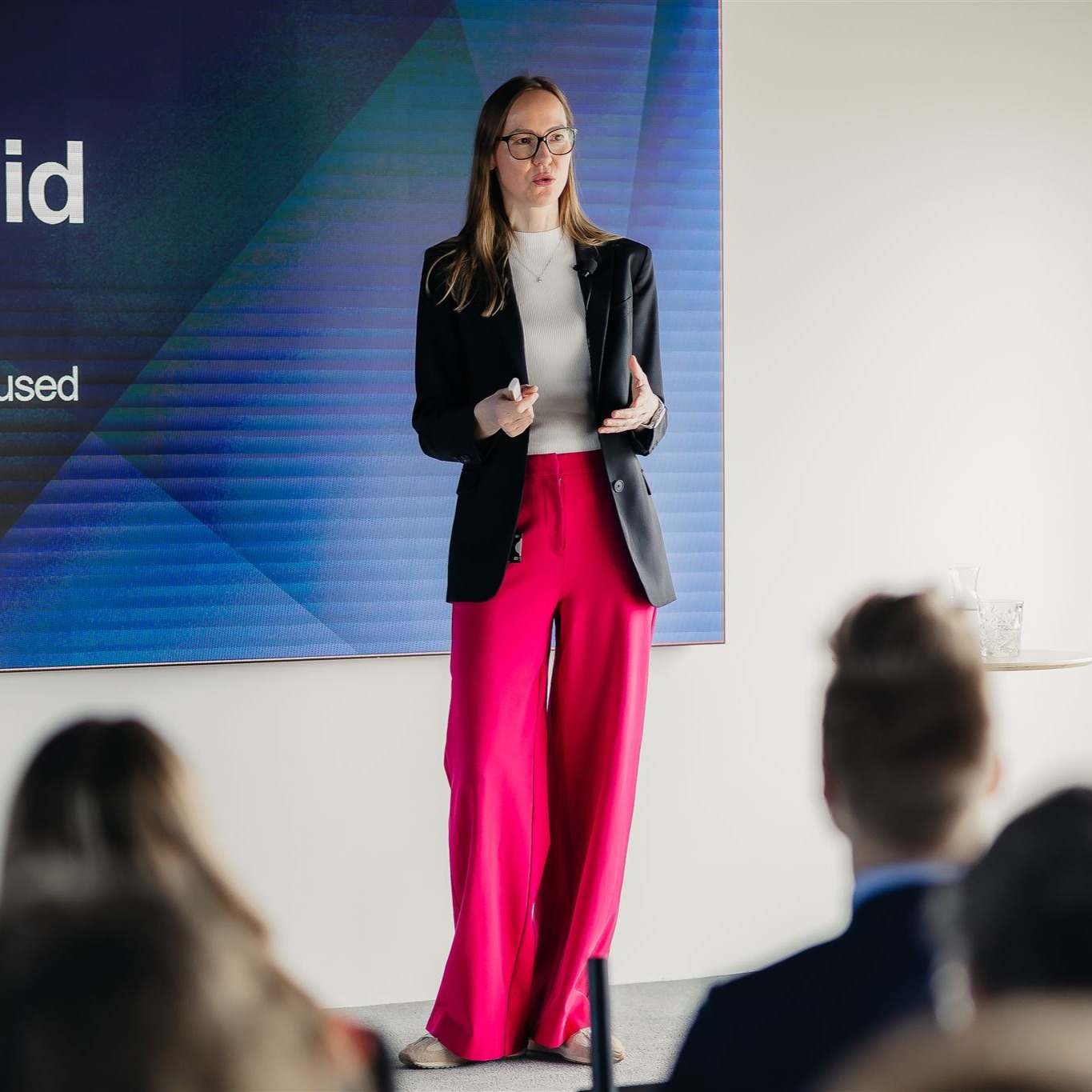
Jane Aavik, Head of Business Customer Segmentation at LHV, introduces the latest trends, payment technologies and strategies that will help every merchant and service provider succeed in this new landscape.
Growth is slowing worldwide, shifting the focus to customer retention
Although the subscription economy has grown by an astonishing 435% over the past decade (Stripe, 2024), with the market expected to exceed USD 1.5 trillion by 2033 (Grand View Research, 2024), its dynamics are beginning to change.
Research shows that overall market growth has slowed to 13%, while the rate of new customer acquisition has stabilised at around 3% (Recurly, 2026). As a result, success no longer depends solely on attracting new customers; retaining existing ones has become more important than ever. This is particularly significant given that 52% of consumers have cancelled at least one subscription over the past year, primarily because they no longer use the service (Recurly, 2026).
At the same time, this presents a major opportunity. According to subscription management platform Recurly, one in four new subscribers is actually a returning customer. This makes well-designed win-back campaigns an essential growth strategy for any business.
Which industries benefit most from the subscription model today?
Recurring payments have become the standard across a wide range of industries. No longer the exclusive domain of major technology companies, subscription-based business models now extend from everyday consumer goods to local leisure and recreational services. Today, the subscription model is particularly popular in the following sectors.
- SaaS (Software as a Service) and enterprise software. This includes global cloud platforms such as AWS and customer relationship management (CRM) systems (e.g. Salesforce). In Estonia, a growing number of local business service providers also operate on a monthly subscription basis, including the digital signing platform Agrello and the accounting software provider Merit Tarkvara.
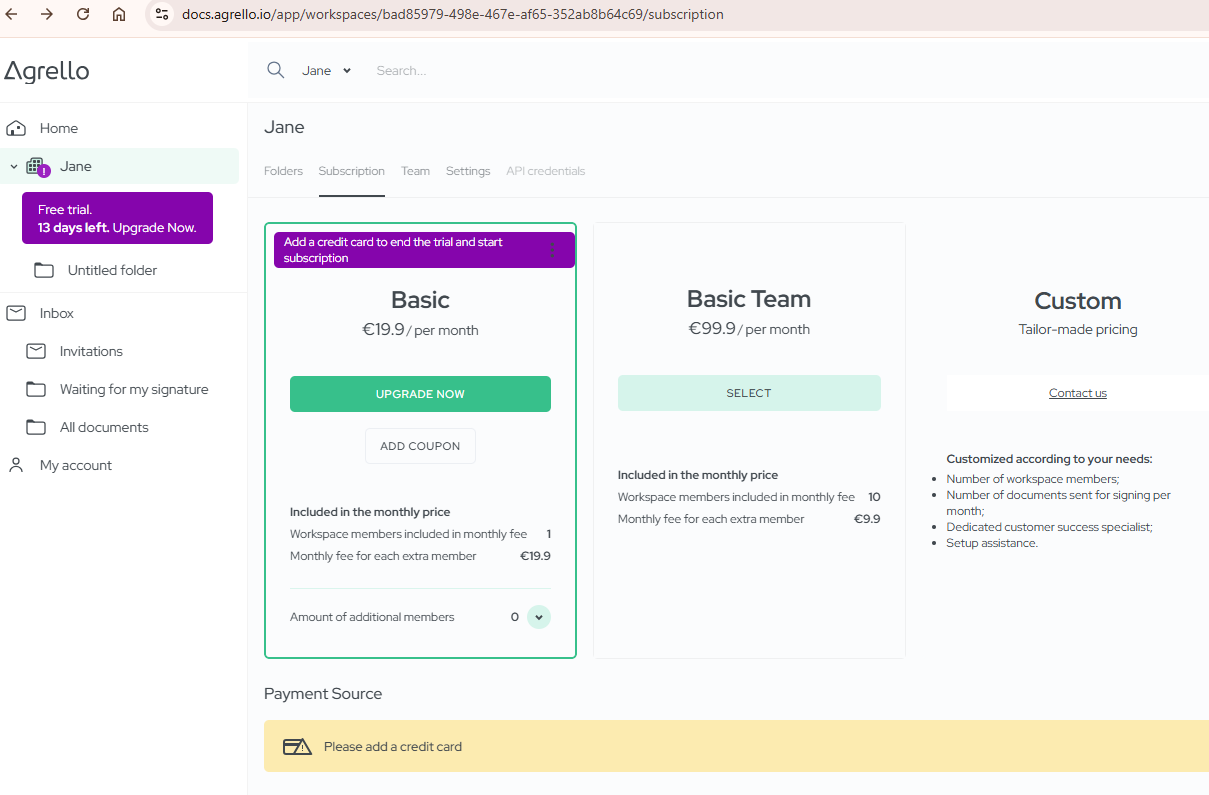
Screenshot of the Agrello website illustrating the setup of an automatic subscription payment. Source: Agrello.
-
Media and entertainment. Video streaming services such as Netflix, music streaming platforms such as Spotify, and digital newspapers and other publications, including Delfi and Postimees, all rely on monthly subscription fees that give users ongoing access to their content.
-
Consumer goods and parcel services. Meal kits (e.g. HelloFresh), beauty and skincare boxes (e.g. LOOKFANTASTIC), pet food subscriptions, and even regular flower deliveries to homes or offices are all delivered automatically at recurring intervals in exchange for a monthly fee.
-
Health, fitness, and wellbeing. Monthly gym memberships, fitness classes, and dance studios (e.g. DanceAct), as well as recurring subscriptions for health supplements, are all examples of services built around recurring payments.
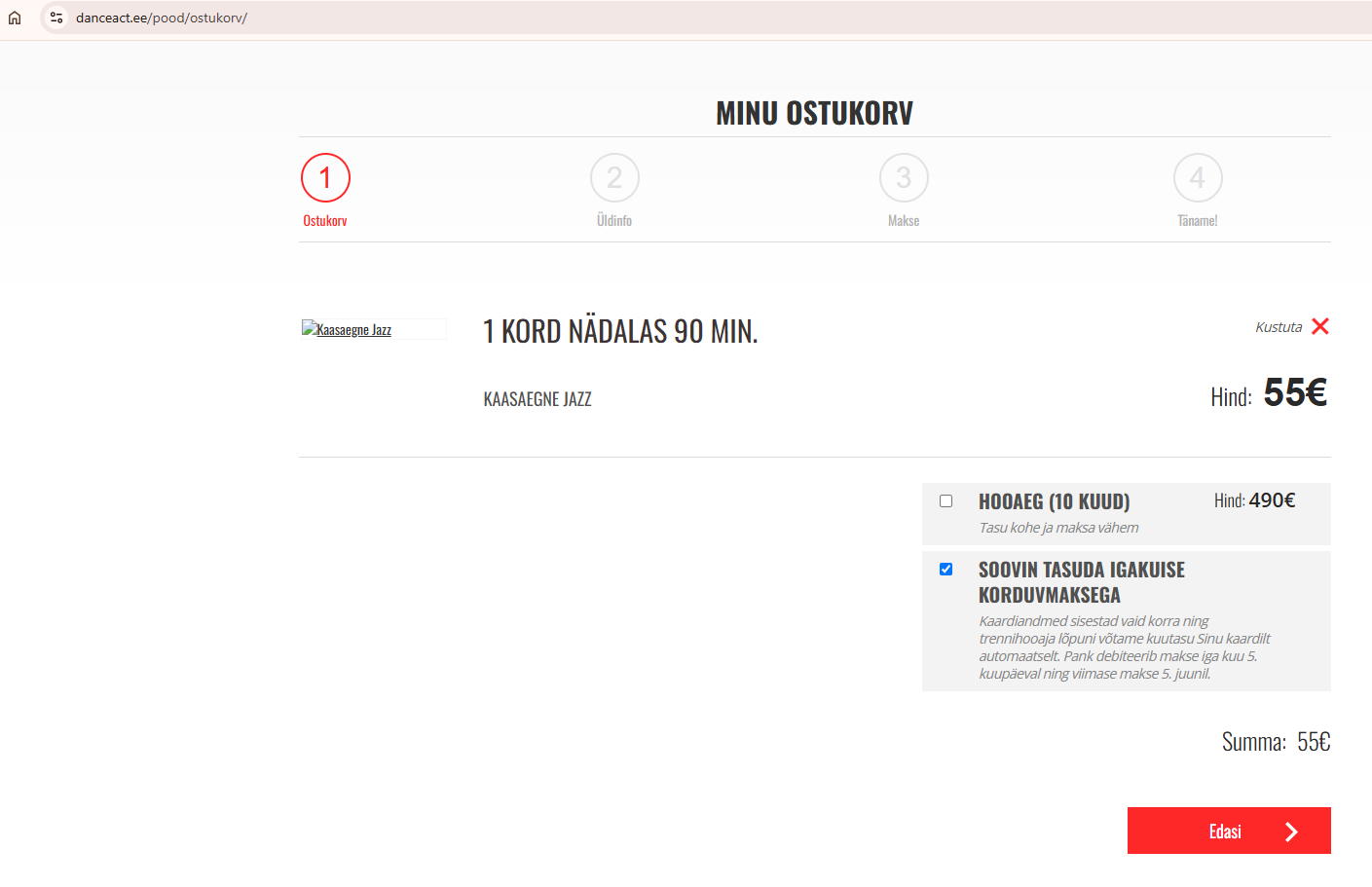
Screenshot of the DanceAct website illustrating the setup of an automatic subscription payment. Source: DanceAct.
-
Mobility and transport. Premium memberships for food delivery services (e.g. Wolt+), car subscription and rental services, and monthly subscriptions for electric scooter services (e.g. Bolt).
-
Utilities, childcare fees, and charity. Regular payments for household utility bills, nursery or kindergarten fees, and monthly donations to charitable organisations are increasingly managed through automated recurring payments.
Five key trends shaping the market
Today’s subscription economy and customer expectations are being driven by five key trends.
1. Tackling subscription fatigue
Consumers have become increasingly cost-conscious and are scrutinising every recurring monthly expense. This is encouraging businesses to focus on maximising customer lifetime value and offering flexible solutions that reduce cancellations caused by subscription fatigue.
The impact of this trend naturally varies by industry and service type. For example, according to Georg Kodusaar, the CEO of the dance studio DanceAct, their cancellation rate has not increased. Consumer behaviour on entertainment platforms (e.g. Netflix), however, may be very different, with users more likely to pause their subscriptions temporarily.
2. Flexible plans and pay-as-you-go pricing
Rigid, one-size-fits-all subscription plans are becoming a thing of the past. Customers increasingly expect to have greater control over their spending, driving the adoption of flexible pricing models ranging from tiered subscription plans to pay-as-you-go pricing.
One particularly customer-friendly feature is the ability to pause a subscription instead of cancelling it altogether. For example, customers going on an extended holiday can temporarily suspend their gym membership without having to terminate their contract.
Although some service providers in Estonia already offer this level of flexibility by default, they do not always promote it prominently, as businesses also need to manage their cash flow. This is why annual subscriptions are typically priced more attractively than paying for the service on a month-by-month basis.
3. Artificial intelligence as a smart assistant
Artificial intelligence is no longer just an analytical tool – it is increasingly taking an active role in business operations. AI can predict customer churn, generate personalised retention offers, and automatically resolve payment failures. Consumer confidence in AI is also growing: as many as 43% of consumers are willing to let AI manage their subscriptions, particularly for fraud prevention and content personalisation (Recurly, 2026).
4. Business customers are driving the market
The majority of the subscription economy is no longer driven by individual consumers but by businesses. B2B services already account for 55.2% of the global subscription market (Grand View Research, 2024).
Cloud services and Software as a Service (SaaS) solutions have become the norm for business customers, as companies increasingly seek to avoid large upfront software investments (capital expenditure, i.e. CapEx). Instead, they favour flexible and predictable monthly operating expenses (OpEx). This strong demand from businesses has made B2B subscriptions the fastest-growing and most stable segment of the subscription economy.
5. Sustainability and ethical branding
Sustainability has become an increasingly important purchasing criterion for consumers, particularly across Europe. Businesses offering carbon-neutral delivery services and products packaged in recyclable materials are growing faster than the market average.
How can recurring payments be made more convenient for both customers and service providers?
Choosing the right payment collection technology is essential for ensuring a stable and predictable revenue stream. Below is an overview of the main payment infrastructure options available for subscription-based business models. All of these are included in LHV’s payment collection solutions.
-
Payment cards (card-on-file). Payment cards remain the universal standard for recurring payments. During the initial purchase, the customer enters their card details online and authorises future automatic charges. The system then securely stores a payment token, allowing the business to charge the customer’s card automatically each month.
While payment cards are often associated globally with relatively high processing fees and the risk of failed payments due to expired cards (known as involuntary churn), the situation in the Baltic States is much more favourable. Card processing fees remain competitive and automatic card updating services have significantly been enhanced.
- Practical solution: With LHV, recurring payments can also be collected via a LinkPay payment link. A service provider simply creates a dedicated subscription payment link, for example, on its website, social media channels or as a QR code on an invoice, and customers can set up their automatic subscription by entering their card details. This is an excellent solution for businesses with limited in-house IT development resources.
-
Open Banking / Payment Initiation Service (OBA/PIS). This is one of the fastest-growing payment methods in the European Union, built on the Payment Services Directive (PSD2) and account-to-account (A2A) payments. Customers can set up automatic payments directly within the service provider’s online environment using open banking. Lauri Teder, the CEO of LHV Paytech, explains where this solution works best: ‘LHV already offers this solution, and it is ideal where every recurring payment is for exactly the same amount.’ It is worth noting, however, that standing payments set up through open banking are not currently supported by off-the-shelf integrations (e.g. Magento plugin). The solution is therefore available only to merchants that use a direct API integration. Read more about setting up the solution here.
-
E-invoice standing order. If most of your customers are based in Estonia and prefer traditional bank-based payments, an e-invoice standing order is another option for collecting recurring payments. Each month, your business sends an e-invoice to the customer via LHV Pank or its accounting software. If the customer has authorised an e-invoice standing order with LHV, the bank automatically settles the invoice from the customer’s account. As this solution requires customers to complete additional setup steps, it may not appeal to everyone. Today’s consumers expect the process of setting up recurring payments to be as quick and seamless as possible.
Summary
If you want to increase your company’s revenue through automated recurring payments, there are four practical steps worth taking.
-
Offer flexibility by allowing customers to pause payments rather than cancel their subscription outright. Don’t try to hold on to customers at all costs. Give them the option to put their subscription on hold. Data shows that as many as 75% of customers who pause their subscription eventually return to the service (Recurly, 2026).
-
Consider offering standing payments through open banking. If your business operates primarily in Estonia and the standing payment amount always remains the same, it is worth offering customers the option of setting up standing payments via open banking (PIS) alongside card payments. Estonian consumers are well known for preferring to pay directly from their bank accounts.
-
Use AI to recover failed payments. Smart automation can retry unsuccessful payments and help prevent customer churn. AI-powered payment recovery can rescue up to 40% of failed transactions (Recurly, 2026).
-
Focus on winning back former customers. Acquiring new customers is expensive. Instead, target campaigns at customers who have previously used your service, as one in four new subscribers is actually a returning customer (Recurly, 2026).
New subscribers can benefit from six months of free LHV payment gateway services, while payment terminal rental is free for the first three months. Find out more about the campaign terms and conditions.
For more information about LHV’s payment collection solutions, visit our website.
The financial service provider is AS LHV Pank. Please read the terms and conditions and understand the risks at lhv.ee, and consult a professional adviser, if necessary.

 A little-known option: a young person can take out their first home loan with the help of their parents10. october 2026Financial wisdom/Banking/Youth Bank
 Before taking out a home loan, give it a trial run for a couple of months01. october 2026Youth Bank/Banking/Financial wisdom/Economy